Censored: The Hollywood Code

Censorship isn't always imposed from above. In order to avoid some perceived punishment, or to curry favor with those in power, media will censor itself.
And how fucking insidious is it when we give in before we're even told no?
But the thing is, this self-censorship is not new. Especially in the U.S.
Just look at the story of the Hays Code in Hollywood.
In this bonus series for paid subscribers of the Rebel Yell Creative newsletter, we look at extra Art of Resistance stories: lesser-known banned books, hidden methods of censorship, the wild world of manifestos, and more powerful ways of using art as resistance. This week: The Hays Code, a form of self-censorship that transformed film and impacts what we see today.
PRE-CODE HOLLYWOOD
In the 1920s, film was booming. And it was rowdy and wild.
We might not expect it, considering what came after. But movies in the 1920s showed sexual language and situations, interracial relationships, profanity, drug use, infidelity, abortion, and gay themes and stories. The bad guys would win, and were often the heroes. Women were badasses, independent and sexually liberated.
So of course, conservatives in government and the church were horrified. And as film became more and more popular, these leaders insisted that Hollywood get reined in.
A group of studio heads formed the Motion Picture Producers and Distributors of America (now the Motion Picture Association), and they recruited conservative political operative and church elder Will H. Hays to lead it. His job: make Hollywood and what came out of Hollywood more wholesome.
They were afraid of government censorship down the line. So they censored themselves ahead of that.
The MPPDA developed the original Hays code to self-censor material that might be "morally objectionable." But these original rules didn't go far enough, according to two powerful priests. These men drafted their own guidelines, passed them on to Hays, and Hays and team... just accepted them.
THE HAYS CODE

The Code changed many times, but was guided by three general principles intended to safeguard the “moral obligations” of the motion picture:
“No picture shall be produced which will lower the moral standards of those who see it. Hence the sympathy of the audience shall never be thrown to the side of crime, wrongdoing, evil, or sin.”
“Correct standards of life, subject only to the requirements of drama and entertainment, shall be presented.”
“Law, natural or human, shall not be ridiculed, nor shall sympathy be created for its violation.”
The Code included words outlawed in spoken dialogue. Sometimes, the Code prohibited certain topics; the original 1930 version of the Code completely outlawed showing “illegal drug traffic,” “methods of smuggling,” “excessive and lustful kissing,” “white slavery” (sex trafficking and prostitution), and any “sex relationship between the white and black races.”
Over the years various specific rules were listed in the Code, including:
“abortion shall be discouraged, shall never be more than suggested, and when referred to shall be condemned”
“the name of Jesus Christ should never be used except in reverence”
“throughout the presentation, evil and good are never confused and that evil is always recognized clearly as evil”
“The triangle, that is, the love of a third party for one already married, needs careful handling. The treatment should not throw sympathy against marriage as an institution.”
“Criminals should not be made heroes, even if they are historical criminals.”
1930s-1950s FILMS
The Hays Code was technically voluntary. But in practice, movies that didn't abide by the code would not get a wide theatrical release. And in a time long before multiple channels and streaming, that meant the movie would disappear.
So movie makers did their best to follow the code. Some embraced the rules; some got very creative in order to fit within.
But for nearly 30 years, this was the guidelines. That meant actors who didn't fit into code, especially queer folks, had to hide. That meant generations of kids and adults who learned what was normal, what was wholesome, what was right and good through movies. And those movies explicitly allowed only certain kinds of women and behavior, certain relationships, certain people.
'SOME LIKE IT HOT'
The code was increasingly seen as a straitjacket by the 1950s. And the threats lost their teeth.

In 1959, "Some Like It Hot," with Marilyn Monroe, Jack Lemmon, and Tony Curtis, was released without approval from the managers of the code. It was bawdy, with a boozy and gleefully sultry Marilyn, two men cross-dressing, and suggestions of gay relationships and gender fluidity. And it was fun and funny.
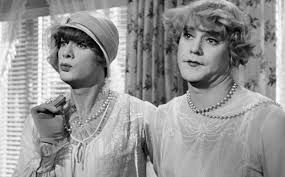
The official code administrators did not approve the movie. The state of Kansas banned it, and the Catholic Church decried it.
But audiences? Loved it. The movie was a bit hit, despite all the things it had going against it.
And that success weakened the code. What authority did this voluntary rule have it those that defied it had massive success?
AFTER THE CODE
Movies began to push the limits, and the code went away. It was replaced by the movie rating system, it's own sort of absurd fuckery that often had no bearing on success.
And that's a success story of overcoming censorship. But it's also a story of resisting the pressure to censor ourselves.
The impact is not just in money and in fame. Representation matters, and for decades, only certain people were represented well. Black and brown people were stereotyped or written out. Women were made into simpering objects. Queer people the villains. And those representations lasted long past the code, and linger today.
The hypocrisy was exponential as well. While the code was busy mandating a sort of morality on screen, off screen movie producers were routinely degrading and assaulting actresses. Movie studios made propaganda for the war department during World War II and after. And new books and movies come out all the time telling the secret stories of Old Hollywood, showing a schizophrenic, hypocritical society.
Today, MAGA culture warriors will often look back at the golden age of Hollywood and long for that simpler time. What they're really longing for is censorship, and rewriting our stories. And they're pressuring media to do the same today.
The trick is to not censor ourselves.
Sources:
This bonus series is just one of your benefits as a paid subscriber of the Rebel Yell Creative newsletter and/or Art Lab member. Look for more stories coming your way!


Comments